

On this page
- Key takeaways
- How long does it take to build a business website?
- What are the phases of a website build?
- What really decides how long a website takes?
- Why does content cause most website delays?
- How do feedback and approvals change the timeline?
- Does a Jamnagar business get a faster build from a local developer?
- How does scope change the time and cost together?
- How long after the build until the website is live and found?
- How can you shorten your own website timeline?
- Ready to plan your website timeline?
How Long Does It Take to Build a Business Website in India?. A business website usually takes 2 to 8 weeks. See each build phase, what delays launch, and how to prep your content so your site goes live sooner. . WordPress & SEO.
A business website usually takes weeks, not days, and the gap between a fast launch and a slow one is mostly decided before any design starts. Goodfirms surveyed web companies and found basic sites at 2 to 4 weeks and midsize business sites at 4 to 8 weeks. Your content and feedback speed move you inside that range.
If you’re planning a site for your shop, clinic, workshop or service business, the useful question isn’t “what’s the fastest anyone can do it?” It’s “what will my project depend on?” This guide walks through the phases, shows where the calendar really slips, and gives you a short prep list so you don’t become the bottleneck.
Key takeaways#
- Published ranges for professional sites run from about 2 to 4 weeks for basic sites to 4 to 8 weeks for midsize business sites (Goodfirms survey via Shopify).
- Late content is the most common reason a project stalls. Unclear scope is the second.
- Phases overlap, so you can’t add the durations together and call it a launch date.
- Your feedback speed matters as much as the developer’s build speed.
- Launch isn’t the finish line. Testing, DNS and Google crawling all add waiting time.
How long does it take to build a business website?#
Most professionally built business websites take somewhere between two and eight weeks. The Goodfirms survey of more than 300 web development companies, as reported by Shopify, lists 2 to 4 weeks for a basic site and 4 to 8 weeks for a midsize one. Pages, features and how fast you respond decide where you land.
Those numbers describe calendar time from kickoff to launch, and they assume a normal, steady project. A rushed one might beat them. A slow one will blow past them. I won’t give you a promise here, because anyone who promises an exact number before seeing your content is guessing.
Can a site be built in one week? A very small one, such as a single page with one clear action, can sometimes move that fast if every piece of text, every photo and the logo are ready on day one and feedback comes back quickly. Anything with several pages, integrations or slow approvals will take longer, so treat one week as the exception.
Different sources also disagree, and that’s worth knowing. Here’s how two of them frame it.
| Type of site | Goodfirms survey (via Shopify) | Elementor guide (professional build) | What mostly drives the time |
|---|---|---|---|
| Basic or brochure site | 2 to 4 weeks | 1 to 2 weeks (1 to 5 pages) | Having text and photos ready |
| Midsize business site | 4 to 8 weeks | 4 to 8 weeks (5 to 15 pages, blog, forms) | Number of pages and review rounds |
| Online store | 8 to 28 weeks | 8 to 12 weeks (under 50 products) | Product data, payments, delivery setup |
| Custom web application | 8 to 16 weeks | 6 to 12+ months | Scope, integrations and testing |
Sources: Shopify, How Long Does It Take to Build a Website? and Elementor, How Long Does It Take to Build a Website?. Both were checked on 9 November 2026.
Notice the last row. Two reputable sources are months apart on custom applications, and that’s the point: the bigger and less defined the project, the less any average tells you. Treat every range as a planning hint, then ask your developer for a schedule based on your actual scope.
What are the phases of a website build?#
A typical business website moves through planning, content, design, development, testing and launch. Some of these overlap, so content is often written while design is underway. Each phase has one thing it depends on, and that dependency, more than the work itself, is what sets your timeline.
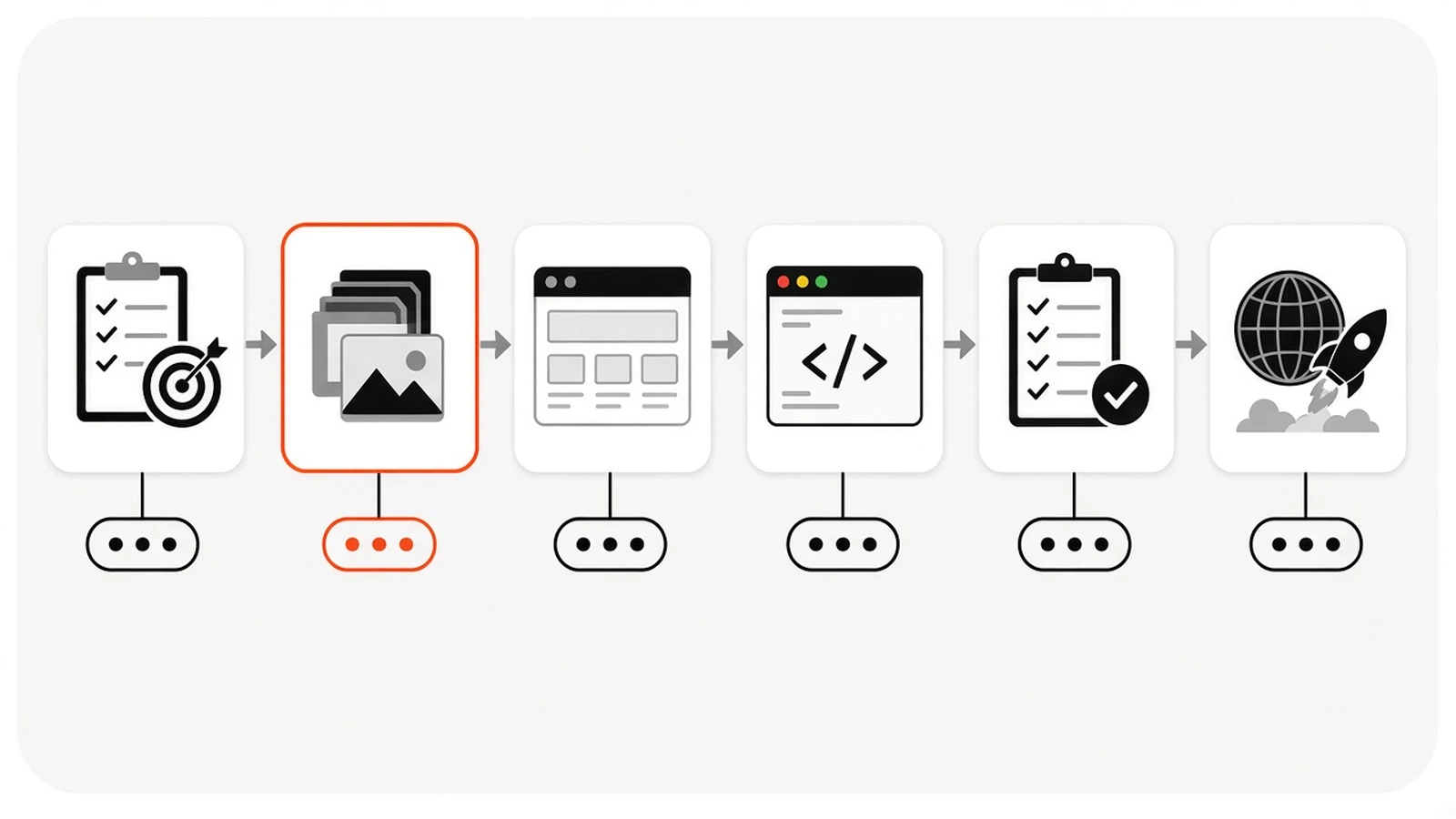
| Phase | What happens | What it depends on |
|---|---|---|
| Planning | Goals, page list, features, examples you like | A clear idea of what the site must do |
| Content | Page text, photos, logo, service details | You, mostly |
| Design | Home page look first, then inner pages | Approved content and quick feedback |
| Development | Pages built, forms, WhatsApp, maps, mobile layout | Final design and a stable scope |
| Testing | Forms, links and real phones checked, fixes made | Honest review from one decision maker |
| Launch | Domain connected, analytics set, handover | Domain and hosting access |
Shopify’s own breakdown lists seven phases, starting with choosing the CMS and hosting and ending with launch and final quality checks. It also warns that phases can overlap, so the durations don’t simply add up. That matches how real projects behave. If text is ready before design starts, you save days. If it isn’t, design waits.
What really decides how long a website takes?#
Five things do most of the deciding: how many pages you need, how ready your content is, how quickly you give feedback, which integrations the site needs, and how many people must approve it. None of these is about how fast someone can type code. They’re about decisions and waiting.
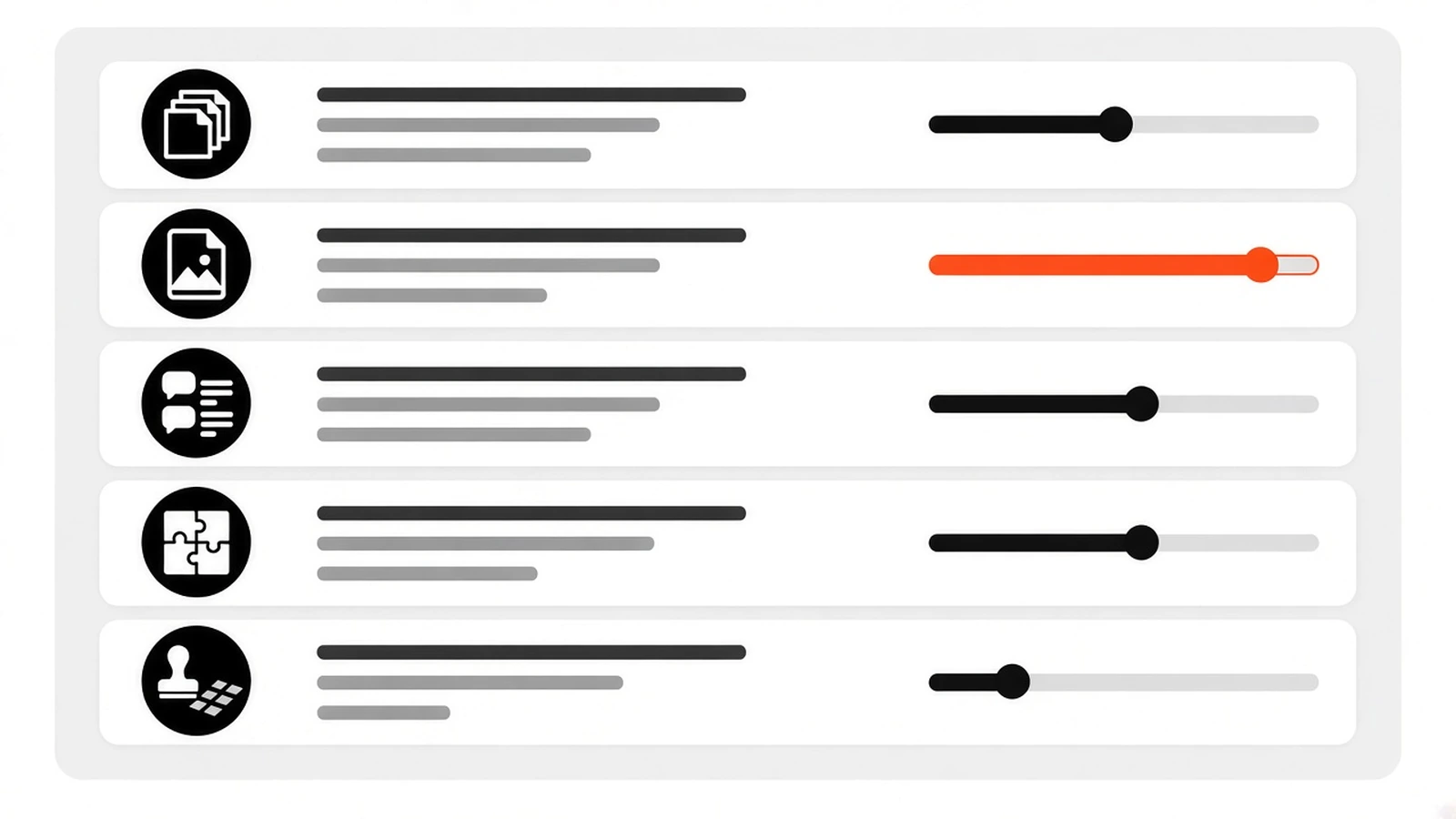
- Page count. Every page needs text, images and a layout check. A five-page site and a twenty-page site aren’t the same project.
- Content readiness. Finished text, real photos and a usable logo let design and build run side by side.
- Feedback speed. A review round is quick to apply and slow to collect when comments trickle in over a week.
- Integrations. Payment gateways, booking tools, CRMs and WhatsApp widgets each add setup and testing.
- Approvals. One person with authority closes a round fast. A group of five can reopen settled decisions.
Elementor’s guide says the number one reason projects stall is a lack of prepared content, and the number two reason is undefined scope. Zentus reports that waiting on client content, feedback and approvals can add 2 to 6 weeks to a project. Different companies, same story.
Why does content cause most website delays?#
Content causes delays because it can’t be rushed by the developer. Someone who knows your business has to write the service descriptions, choose real photos and approve the wording. Business owners usually do this between customers and calls, so it drifts. A page layout without real text is just a guess.
Here’s what I’d gather before kickoff, even in rough form:
- A short paragraph for each service or product you want on the site.
- Your logo in the best quality file you have.
- Real photos of your place, team or work, not stock images.
- Your address, phone number, opening hours and map pin.
- Any testimonials you already have permission to use.
- Login details for your domain and hosting, if you already own them.
You don’t need polished writing. A rough draft you can speak through on a call is enough to start. Polish comes in the review round, and it’s much faster to edit text than to wait for it to exist.
How do feedback and approvals change the timeline?#
Feedback changes the timeline because every review round has two halves: the developer’s time to apply changes and your time to collect them. The first half is short. The second can stretch to days if comments arrive in pieces or if several people have different opinions about the same page.
The fix is simple, though not always easy. Pick one person who has the final say for your business. Gather every comment into one list, ideally in one message, and send it once. If a partner or family member wants to weigh in, let them do it before the list goes out, not after.
Changing your mind late is the other half of this problem. Redesigning the home page after the inner pages are built means redoing the inner pages too. If you aren’t sure about something, say so early. A quick call in the design phase saves far more time than a surprise in the testing phase.
Does a Jamnagar business get a faster build from a local developer?#
A local developer can make the communication side quicker, but the build itself doesn’t speed up because of the postcode. Being in the same city helps with quick calls, collecting photos and sitting down to agree on content. The calendar still depends on scope, ready content and how fast you decide.
If you run a business in Jamnagar, that said, some things do get easier. Photos of your shop or workshop can be taken in an afternoon. Questions about your services can be settled in one conversation rather than a long chain of messages. For a broader look at what a local site should include, read Website Design in Jamnagar: What Your Business Needs and What It Costs.
Whether you hire a freelancer or an agency also shapes the process. A freelancer usually means fewer hand-offs. An agency may bring more people and more steps. I’ve compared both in Freelancer vs Agency for a Small Business Website in India.
How does scope change the time and cost together?#
Scope links time and cost. More pages, more features and more integrations mean more build and more testing, so both go up together. A smaller site is usually quicker and cheaper. A lower price on its own doesn’t shorten the time you spend writing text and giving feedback.
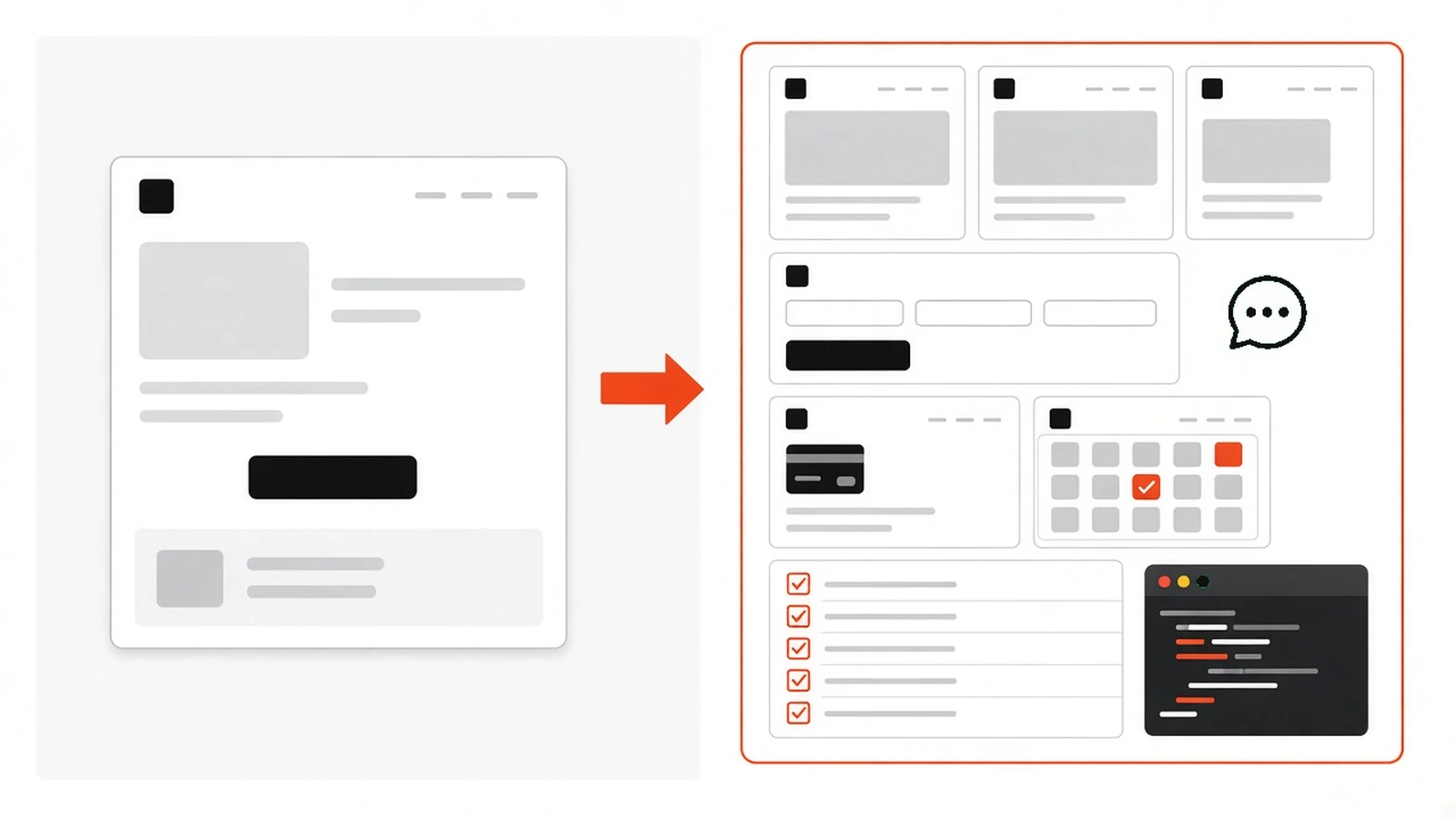
My own single-page websites start at INR 15,000. I’m not going to attach a delivery date to that number here, because the date depends on your content and how quickly we agree on things. What I can say is that fewer pages and no extra features removes a lot of the usual waiting. For a closer look at what moves the price, see Website Cost in India 2026: What Actually Drives the Price.
Adding features mid-build deserves a special mention. A booking system or online store suggested halfway through isn’t a small tweak. It reopens structure, design and testing. If you want it, plan it from the start. If it can wait, launch first and add it as a second phase.
How long after the build until the website is live and found?#
Being built and being live aren’t the same moment. After the build there’s testing, fixing and connecting your domain. DNS changes can take a while to spread, and Google says crawling a new or updated site can take anywhere from a few days to a few weeks. Plan for that tail.
Google’s own guidance on this is plain: crawling can take from a few days to a few weeks, and you should be patient and monitor progress. You can read it in Google Search Central’s recrawl documentation. So don’t schedule a big announcement for the same hour the site goes live and expect Google traffic that afternoon.
Before launch, run through a proper checklist so you don’t find broken forms after customers do. I keep one here: Website Launch Checklist: What to Check Before a Client Site Goes Live.
How can you shorten your own website timeline?#
You can shorten a timeline by preparing before the project starts. Have your page text, photos and logo ready, name one decision maker, send feedback as a single list, and keep your domain and hosting logins at hand. These cost you nothing and often save the most time.
- Write rough text for every page before kickoff.
- Collect real photos in one folder.
- Decide who approves the final version.
- Send one consolidated list of changes per round.
- Find your domain and hosting logins early.
- Park new feature ideas for after launch.
Some of this is boring, I know. But boring prep is what separates a smooth launch from a project that drifts for months. Most of the time a site isn’t late because the developer was slow. It’s late because it was waiting for something only the owner could provide.
Ready to plan your website timeline?#
If you’d like a realistic schedule for your own business site, send me a short note about what you need. Tell me the pages you have in mind and whether your text and photos are ready, and I’ll tell you honestly what to expect. My single-page sites start at INR 15,000.
Frequently asked questions
How long does it take to build a business website?
It depends on size and how ready your content is. A Goodfirms survey of web companies, reported by Shopify, puts basic websites at 2 to 4 weeks and midsize business sites at 4 to 8 weeks. Most of the variation comes from content, feedback speed and extra features, not from coding.
Can a website be built in one week?
A very small site, such as a single page with one clear action, can sometimes move that fast if every piece of text, every photo and the logo are ready on day one and feedback comes back quickly. Anything with several pages, integrations or slow approvals will take longer, so treat one week as the exception.
What slows down a website project the most?
Content that arrives late is the most common cause. Elementor names missing text and images as the number one reason projects stall, and unclear scope as number two. Slow or scattered feedback and missing domain or hosting logins come right after.
Does a cheaper website get built faster?
Not automatically. Price and speed are linked only through scope. A smaller site with fewer pages and no custom features is usually quicker and cheaper, but a low price does not shorten your own content and feedback time. My single-page sites start at INR 15,000.
Is the website live the moment it is built?
No. After the build you test, fix issues and connect the domain. A DNS change can take a while to spread, so some people may still see the old address for a short time. Google can also take anywhere from a few days to a few weeks to crawl a new site.
How can I make my website project finish sooner?
Write the page text and gather photos and the logo before kickoff. Name one person who gives feedback for the whole business. Send changes as one consolidated list per round, keep your domain and hosting logins handy, and add new features after launch instead of mid-build.
Should a Jamnagar business choose a local developer for speed?
Being in the same city can make calls, photo shoots and quick check-ins easier, which helps feedback move faster. It does not change how long the work itself takes. What matters more is a clear scope, ready content and one decision maker on your side.
Comments
No comments yet. Add the first one below.