

Website Design in Jamnagar: What Your Business Needs and What It Costs
On this page
- Key takeaways
- Does a Jamnagar business really need a website if it already has WhatsApp?
- What should a website for a Jamnagar business include?
- How is the website different for a manufacturer, a shop, a clinic or a restaurant?
- Why does Google Business Profile matter so much for local businesses?
- Should your website be in Gujarati, English or both?
- How fast does a local business website need to be on mobile?
- How should WhatsApp enquiries work on the website?
- What does a website for a Jamnagar business cost?
- Should you start with a single page or a full website?
- What should you check before your website goes live?
- Talk to me about your Jamnagar business website
Website Design in Jamnagar: What Your Business Needs and What It Costs. Planning website design in Jamnagar? See what a local business site needs, from Google Business Profile to WhatsApp enquiries, and what it costs to build. . WordPress & SEO.
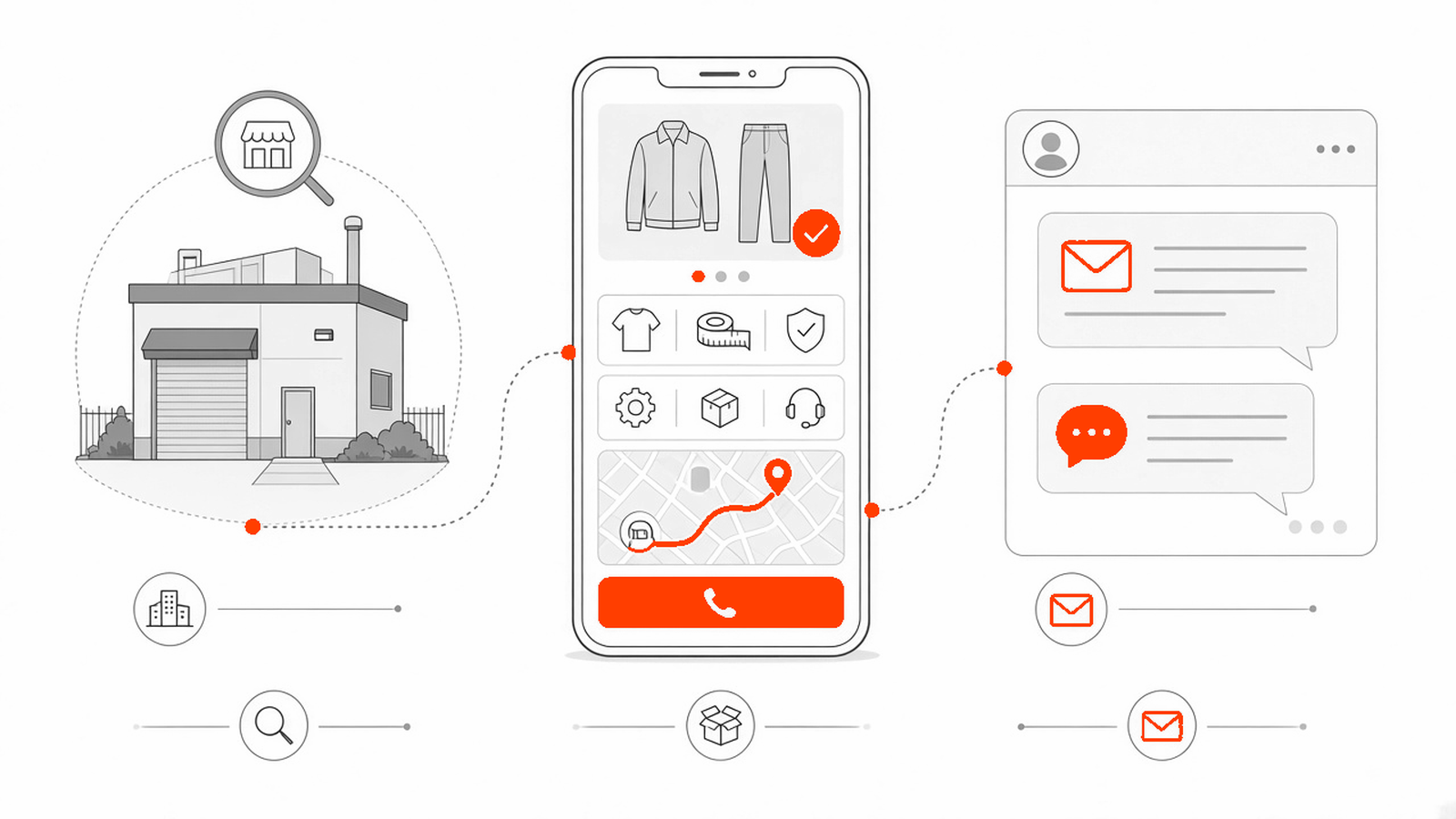
If you run a business in Jamnagar and you’re thinking about a website, you’ve probably heard two very different stories. One person says a website is a waste of money because everyone finds you on WhatsApp anyway. Another quotes you a big number for something you can’t picture.
Both stories skip the useful part. So here’s the plain version, written for owners, not developers.
Short answer: a Jamnagar business needs a fast, mobile-first website that matches its Google Business Profile, makes WhatsApp enquiries one tap away, and explains its products or services in the language its buyers use. Cost depends on pages, content and features. My own starting point is a single-page website from ₹15,000.
Key takeaways#
- Your website and your Google Business Profile should tell the same story: same name, phone, address and hours.
- Most local enquiries in Jamnagar start on a phone, so mobile speed matters more than fancy animation.
- A visible WhatsApp button usually beats a long contact form for local buyers.
- Gujarati, English or both? Decide based on who actually buys from you, not on what looks impressive.
- Price follows scope. A single-page website starts from ₹15,000 with me; more pages, catalogues or online payments need their own quote.
Does a Jamnagar business really need a website if it already has WhatsApp?#
Yes, in most cases. WhatsApp is great for talking to people who already know you. A website is how new people find you, check you’re real, and decide to message you in the first place. The two work together: the site earns the trust, and WhatsApp closes the conversation.
Think about how a buyer behaves today. Someone in Ahmedabad, Pune or Dubai hears about a brass parts supplier in Jamnagar. The first thing they do is search the company name. If nothing comes up except a phone number on a directory site, they get nervous.
The same thing happens locally. A family looking for a new clinic or a coaching centre will search, look at photos, read a few reviews and check the timings. If your competitor has all of that and you don’t, you lose the enquiry before you ever knew it existed.
WhatsApp doesn’t fix that. It’s a channel for conversation, not a place people discover you.
What should a website for a Jamnagar business include?#
At minimum: what you do, who you do it for, where you are, how to contact you, and proof that you’re real. That means clear service or product sections, your address with a map, working phone and WhatsApp links, real photos, and a few lines on why people pick you over the shop next door.
That sounds basic. It is. And yet I see plenty of local sites that bury the phone number in the footer or show stock photos of people who’ve never been to Gujarat.
Here’s a practical list of what usually belongs on a small business site:
- A headline that says what you do in plain words, like “Brass fittings and precision turned parts, made in Jamnagar”.
- Your main products or services, each with a short description and a real photo.
- Your full address, a Google Map embed and the areas you serve or ship to.
- A tap-to-call link and a WhatsApp button that’s visible on every screen size.
- Business hours that match your Google Business Profile exactly.
- A short “about” section: how long you’ve been running, what you specialise in, who’s behind it.
- Basic on-page SEO: page titles, descriptions and headings that use the words your buyers search.
You don’t need all of it on day one. But the first four items are the ones that turn a visitor into an enquiry.
How is the website different for a manufacturer, a shop, a clinic or a restaurant?#
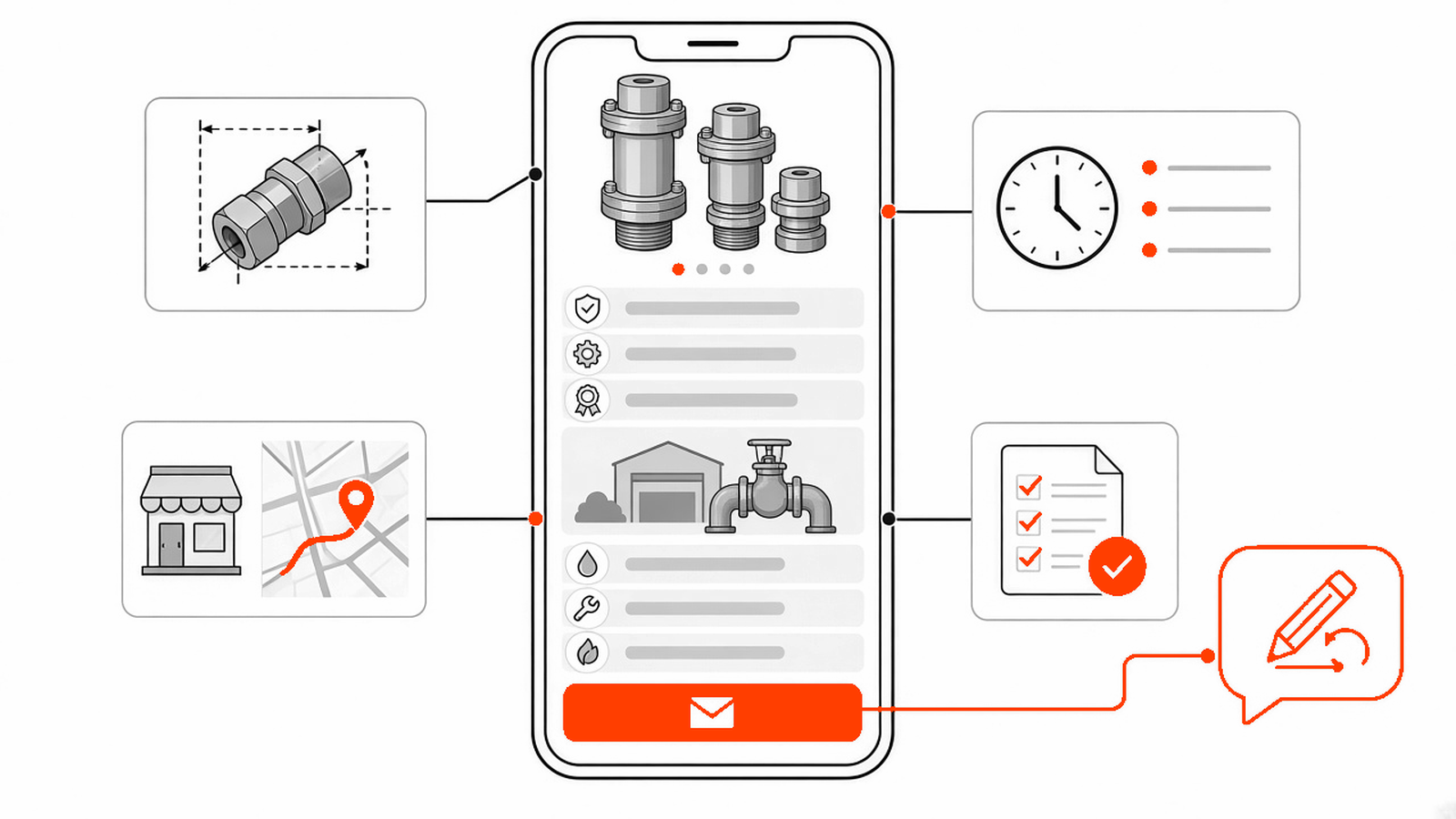
The basics stay the same, but the main job of the site changes. A manufacturer needs a product catalogue and a way to request quotes. A shop needs location, timings and stock highlights. A clinic needs doctor details and appointment contact. A restaurant needs a menu, photos and directions.
Jamnagar has a real mix of businesses, and that’s why one template doesn’t fit everyone. A brass parts unit selling to buyers in other states has almost nothing in common, website-wise, with a sweet shop near the market.
| Business type | Main job of the website | Must-have sections | Best contact method |
|---|---|---|---|
| Brass parts or industrial manufacturer | Earn trust with outside buyers and get quote requests | Product range, materials, capabilities, export or dispatch info | Quote form plus WhatsApp |
| Retail shop or showroom | Bring nearby people through the door | Location, timings, product highlights, photos | Call and WhatsApp |
| Clinic or diagnostic centre | Help patients pick you and reach you quickly | Doctors, services, timings, address, map | Call for appointments |
| Restaurant or cafe | Show the food and make ordering or visiting easy | Menu, photos, directions, delivery links if any | Call, WhatsApp or delivery app |
| Coaching centre or classes | Win parents’ trust and fill batches | Courses, faculty, batch timings, location | WhatsApp and enquiry form |
Notice the contact column. For most of these, the phone and WhatsApp do the heavy lifting. A complex form with ten fields can actually cost you enquiries.
For manufacturers, I’d push a bit harder on the product pages. Someone sourcing parts wants to see the range, the materials and whether you can handle their quantity before they ever pick up the phone. A clean catalogue section does a lot of that selling quietly.
Why does Google Business Profile matter so much for local businesses?#
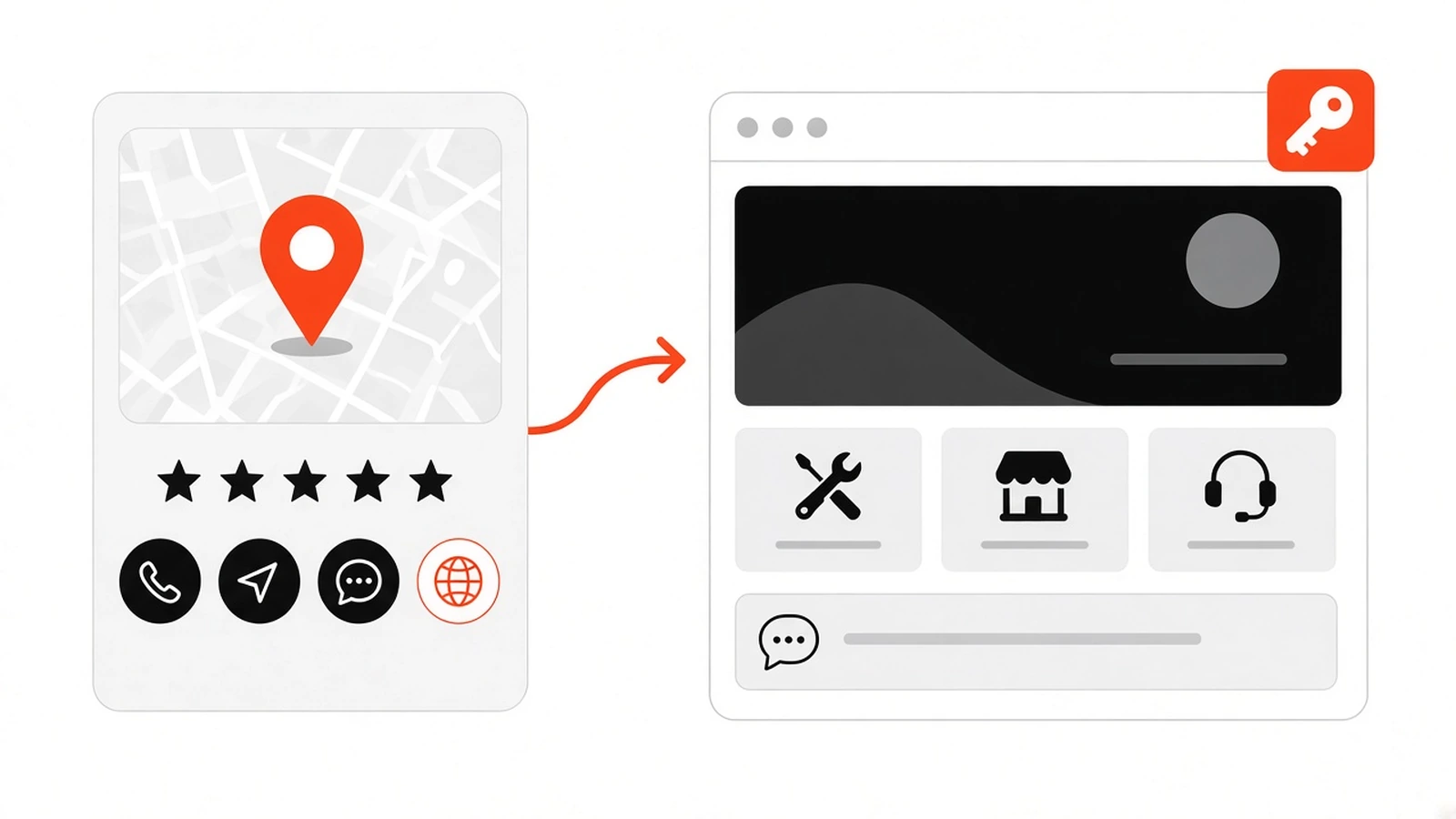
Because for “near me” and city searches, Google often shows the map results before regular websites. Your Business Profile is what appears there. Your website supports it by confirming the same details and giving Google more information about what you do, which helps your profile look complete and trustworthy.
Google’s own help page on how to improve your local ranking says local results are mainly based on relevance, distance and prominence. You can’t move your shop closer to every customer. You can make your profile complete, accurate and active.
Here’s where the website comes in. When your profile links to a site that clearly lists the same name, address and phone number, and describes your services properly, everything lines up. When the site says one phone number and the profile says another, it just looks careless.
A few things I check on every local project:
- The business name is written the same way on the site and on the profile.
- The phone number on the site is the one that actually gets answered.
- Hours on the site match the profile, including holidays if you update them.
- The profile’s website link goes to the right page, not an old URL that’s now broken.
It’s boring work. It’s also the kind of boring work that quietly decides who shows up when someone searches “brass parts manufacturer Jamnagar” or “dentist near me”.
Should your website be in Gujarati, English or both?#
Pick the language your buyers actually use when they search and when they message you. A neighbourhood shop or clinic may do better with Gujarati. A manufacturer selling outside Gujarat usually needs English first. If you truly serve both groups, a properly built two-language site can work, but it doubles the content you need to maintain.
I’d be careful about adding a second language just because it feels like the right thing to do. Every page you add in another language has to be written properly, checked and kept up to date. A half-translated site looks worse than a good single-language one.
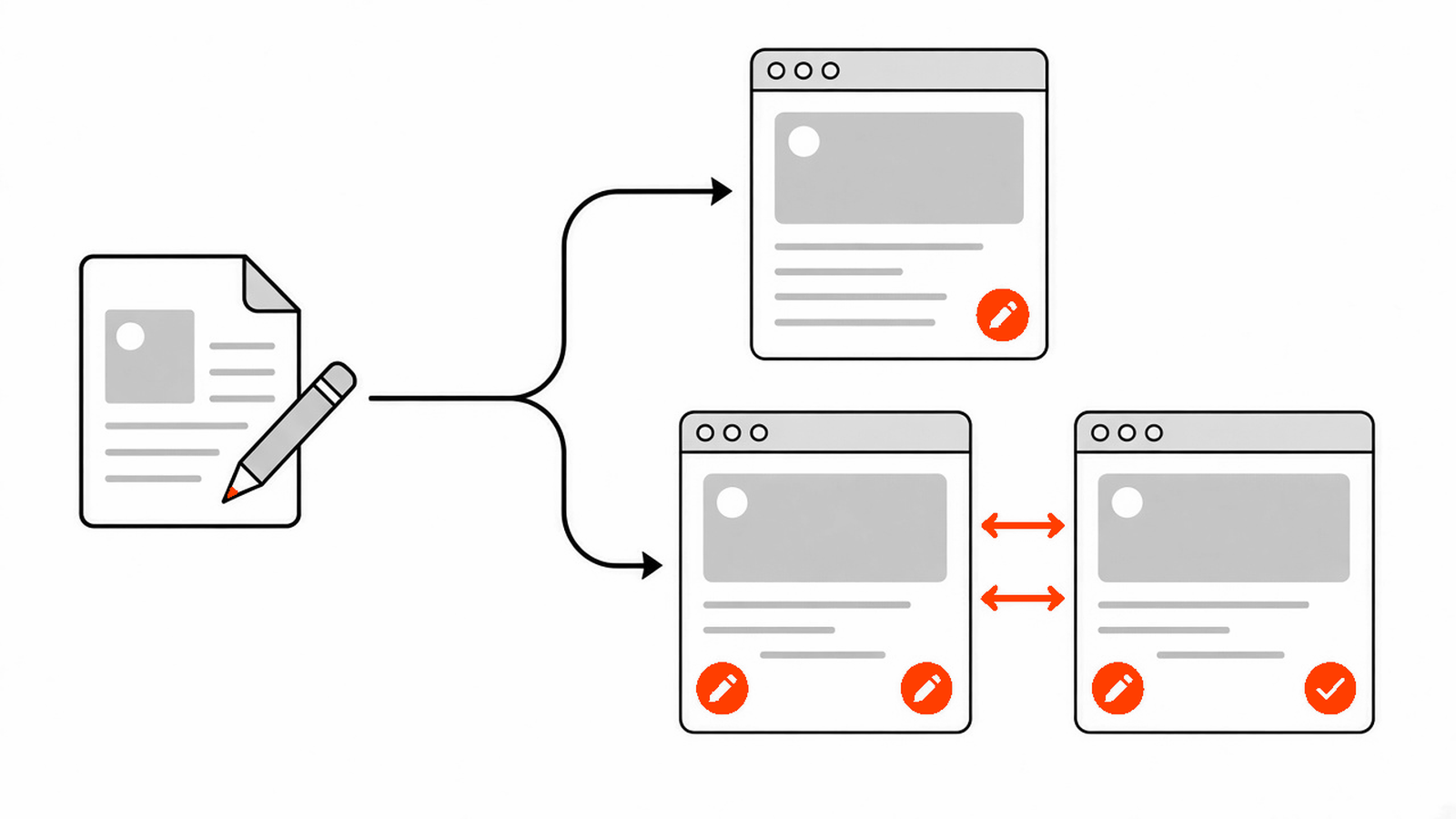
If you do go bilingual, build it the way search engines expect. Google’s documentation on localized versions of your pages explains how to tell Google that a Gujarati page and an English page are versions of each other. That’s a technical detail your developer should handle, but it’s worth knowing it exists so you can ask about it.
A simple middle path many local businesses like: keep the main site in English, and make sure your WhatsApp replies and in-store material are in whatever language your customers prefer. You don’t have to solve everything on the website.
How fast does a local business website need to be on mobile?#
Fast enough that someone on a phone, on mobile data, sees your name, what you do and a contact button within a couple of seconds. Most local visitors are on phones. If the page stalls or jumps around while loading, many of them will press back and call the next result.
Speed isn’t just a developer obsession. It’s the difference between an enquiry and a bounce. Google measures real-user experience through Core Web Vitals, which look at how quickly the main content appears, how quickly the page responds, and how stable the layout is while it loads.
For a small local site, the usual causes of slowness are pretty predictable. Huge photos straight from a phone camera. Sliders with five full-screen images. Too many plugins doing things nobody asked for. Chat widgets and popups that all load at once.
If you want the technical side, I’ve written about making your hero image load first and about stopping layout shift, the annoying jump that makes people tap the wrong button. As an owner, you only need to ask your developer one question: “How does this load on a mid-range phone on mobile data?”
How should WhatsApp enquiries work on the website?#
Put a WhatsApp button where people can always see it, especially on mobile, and have it open a chat with a short message already typed. That removes friction. The visitor taps once, the chat opens with your number, and they only need to press send. You reply from the phone you already use.
This is simple to set up and it’s one of the highest-value things on a local site. A pre-filled message like “Hi, I saw your website and want to ask about brass fittings” also tells you where the enquiry came from.
A couple of small things make a big difference here. Use a number that’s actually monitored during business hours. If you’re closed on Sundays, say so near the button so people aren’t left waiting. And if you have separate numbers for sales and service, label them clearly rather than making visitors guess.
For businesses that get a lot of the same questions, the site itself can answer them before anyone messages. Timings, delivery areas, minimum order quantity, which brands you stock. Fewer repetitive chats means more time for the ones that turn into orders.
What does a website for a Jamnagar business cost?#
With me, a single-page website starts from ₹15,000. That covers one well-planned page with your services, contact options and a mobile-friendly layout. Anything bigger, like multiple pages, a product catalogue, two languages or online payments, depends on the scope, so I quote it after understanding what you actually need.
I don’t publish a long price list on purpose. Two businesses asking for “a five-page website” can mean completely different amounts of work. One has content ready and wants a clean layout. The other needs product photos sorted, descriptions written and a quote system built.
Here’s what usually moves the price, in plain words:
- Number of pages. One page is the simplest. Separate pages for each product line or service add design and setup time.
- Content readiness. If your text and photos are ready, things move faster. If they need to be written or organised, that’s extra work.
- Catalogue size. Ten products and five hundred products are very different jobs.
- Languages. A second language means a second set of pages to build and check.
- Features. Online payments, bookings, dealer logins or stock sync with other software all need their own scope.
I’ve broken this down in more detail in my post on website cost in India in 2026, including what that single-page starting point does and doesn’t include. Domain and hosting renewals are ongoing costs you’ll have whoever builds the site, and they depend on the provider you pick.
Should you start with a single page or a full website?#
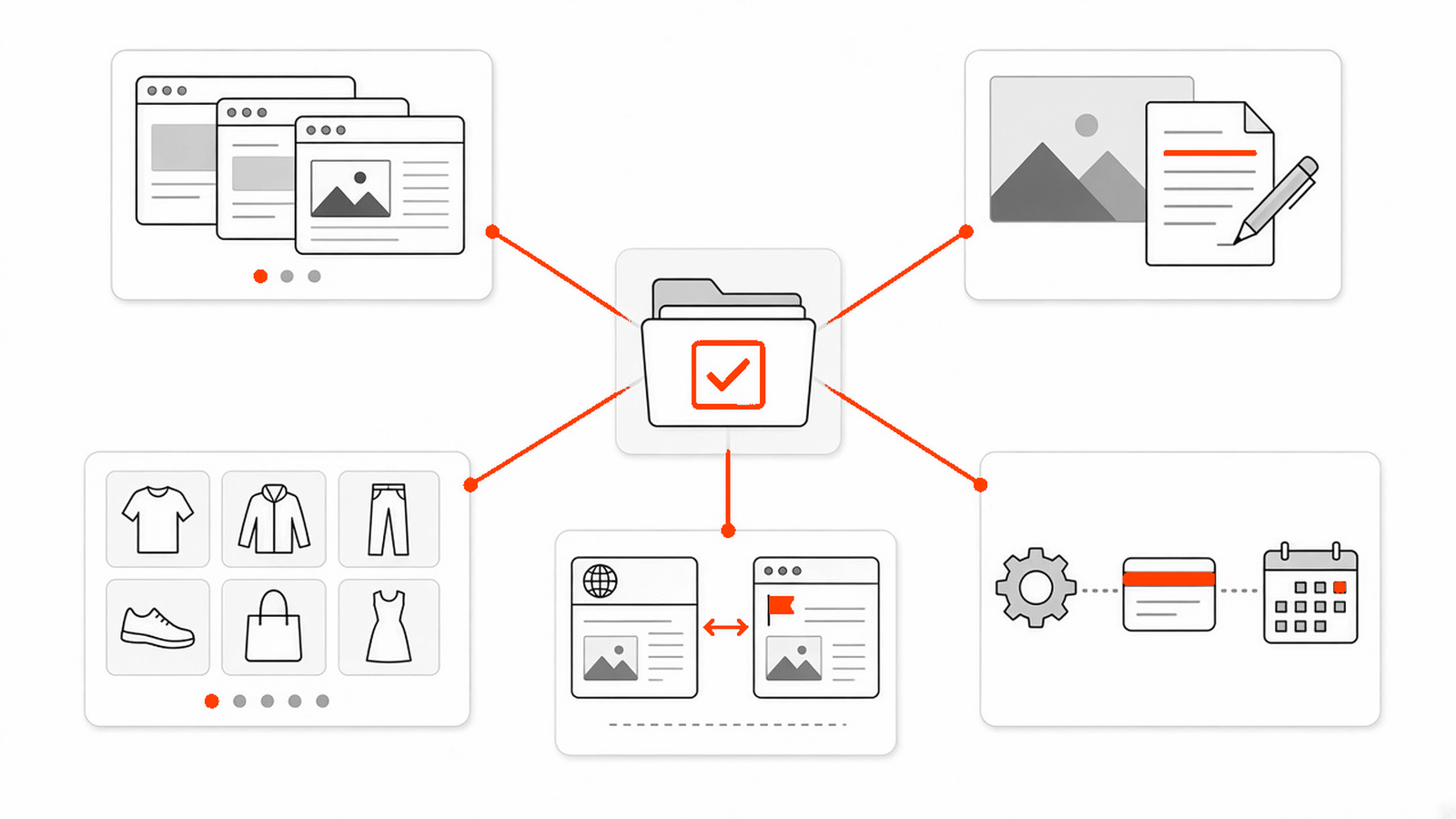
Start with a single page if you mainly need to look credible, show up properly next to your Google Business Profile and get calls or WhatsApp messages. Go for a multi-page site if you have many products or services that people search for separately, or if buyers need detailed information before they contact you.
A single page is a perfectly good first step for a lot of local businesses. A clinic, a coaching centre or a small shop can usually fit everything a visitor needs onto one well-organised page.
Manufacturers and businesses with wide product ranges are different. If people search for each product type by name, separate pages give each one a better chance of being found. Google’s SEO starter guide makes the same basic point: organise your site so each topic has a clear place.
The nice thing is that a well-built single page can grow. If it’s done cleanly, adding pages later doesn’t mean starting from zero.
What should you check before your website goes live?#
Check that every phone number and WhatsApp link works, the site loads quickly on a phone, the address and map are correct, the details match your Google Business Profile, and the page titles describe what you do and where. Then submit the site to Google Search Console so it can be found.
It’s amazing how often a site launches with a test phone number still in the footer. Or a contact form that sends emails to nobody. These aren’t hard to catch, you just have to actually look.
I keep a full website launch checklist for exactly this reason. Even if someone else builds your site, run through it before you share the link with customers.
After launch, update your Google Business Profile with the new website link and share it in your WhatsApp status and business card. A website nobody knows about doesn’t do much.
Talk to me about your Jamnagar business website#
If you run a business in Jamnagar and want a straight answer on whether a single-page site is enough or you need something bigger, send me a short note. Tell me what you sell, who buys from you and how they usually contact you today.
You can reach me through the contact form, message me on WhatsApp, or email info@darshanpanchasara.com. I’ll come back with a few questions to pin down the scope before we talk numbers.
No pressure, no jargon. Just a clear idea of what your business actually needs online.
Frequently asked questions
How much does a website cost in Jamnagar?
It depends on the number of pages, how ready your content is, catalogue size, languages and features. With me, a single-page website starts from ₹15,000. Larger sites with multiple pages, product catalogues or online payments are quoted after understanding the scope.
Do small businesses in Jamnagar need a website if they use WhatsApp?
Usually yes. WhatsApp is great for talking to people who already know you, but a website is how new customers find you, check that you're genuine and decide to message you. The website builds trust and WhatsApp closes the conversation.
Should my business website be in Gujarati or English?
Use the language your buyers search and message in. Local shops and clinics may do better in Gujarati, while manufacturers selling outside Gujarat usually need English first. A two-language site works if you truly serve both groups, but it doubles the content to maintain.
Is a Google Business Profile enough without a website?
A Business Profile helps you show up in map results, but a website gives buyers more detail and confirms your name, address, phone and services. When both show the same details, your business looks more complete and trustworthy to customers and to Google.
What should a small business website include?
At minimum: a clear headline saying what you do, your main products or services with real photos, your address and map, tap-to-call and WhatsApp buttons, business hours matching your Google Business Profile, and a short section on who you are.
Is a single-page website enough for a local business?
For many clinics, coaching centres and shops, yes. One well-organised page can cover services, location, timings and contact. Businesses with many products that people search for separately, like manufacturers, usually benefit from separate pages for each product line.
How do I add a WhatsApp button to my business website?
Use a click-to-chat link with your number and a short pre-filled message, and place the button where it's always visible on mobile. Make sure the number is monitored during business hours so enquiries don't go unanswered.
Comments
No comments yet. Add the first one below.