

How to Hire a Web Developer for a Small Business: Questions to Ask Before You Pay
On this page
- Key takeaways
- How to hire a web developer for a small business, step by step
- What should you prepare before you contact a web developer?
- Freelancer, agency or in-house: who should you be hiring?
- Where do you find a good web developer to hire?
- How do you check a web developer’s portfolio is real?
- What questions should you ask a web developer before hiring?
- Questions about process and communication
- Questions about scope and price
- Questions about ownership and access
- Questions about quality and testing
- Questions about after launch
- Which questions should be answered before you pay a deposit?
- Who should own the domain, hosting and logins?
- How do you compare quotes from different web developers?
- How much does it cost to hire a web developer?
- What are the red flags when hiring a web developer?
- How do you hire a web developer in India if you’re abroad?
- What should happen after you hire a web developer?
- The questions to ask a web developer: a printable checklist
- So, how should you hire a web developer?
How to Hire a Web Developer for a Small Business: Questions to Ask Before You Pay. How to hire a web developer for a small business: the step-by-step process, questions to ask before you pay, red flags and a printable checklist. . WordPress & SEO.

To hire a web developer for a small business, write a one-page brief, shortlist two or three people whose live work matches your project, ask the same questions on a call, and get a written scope, timeline and payment schedule before you pay anything. Keep the domain, hosting and logins in your name from day one.
That’s the short version of how to hire a web developer without regret. I’m Darshan Panchasara, a web developer based in Jamnagar, and I’ve spent 6+ years on the other side of this conversation. Fixing existing sites is one of the most common things people ask me for, and the bad stories I hear usually start the same way: money changed hands before anyone wrote down what was being bought.
This guide walks through the hiring process in order, with the exact questions to ask a web developer before you pay. It works whether you run a shop in Gujarat, a clinic in Pune or a startup in London that wants to work with a developer in India.
Key takeaways#
- Write a one-page brief first. It makes quotes comparable.
- Judge developers by live sites you open on your own phone, not screenshots.
- Ask every candidate the same questions and write down the answers.
- Get scope, exclusions, timeline and payment milestones in writing before the deposit.
- The domain, hosting, email and Google accounts should be in your name.
- Nobody can guarantee a #1 Google ranking. Google says so itself.
- Hold back part of the payment until the site is live and you have every login.
How to hire a web developer for a small business, step by step#
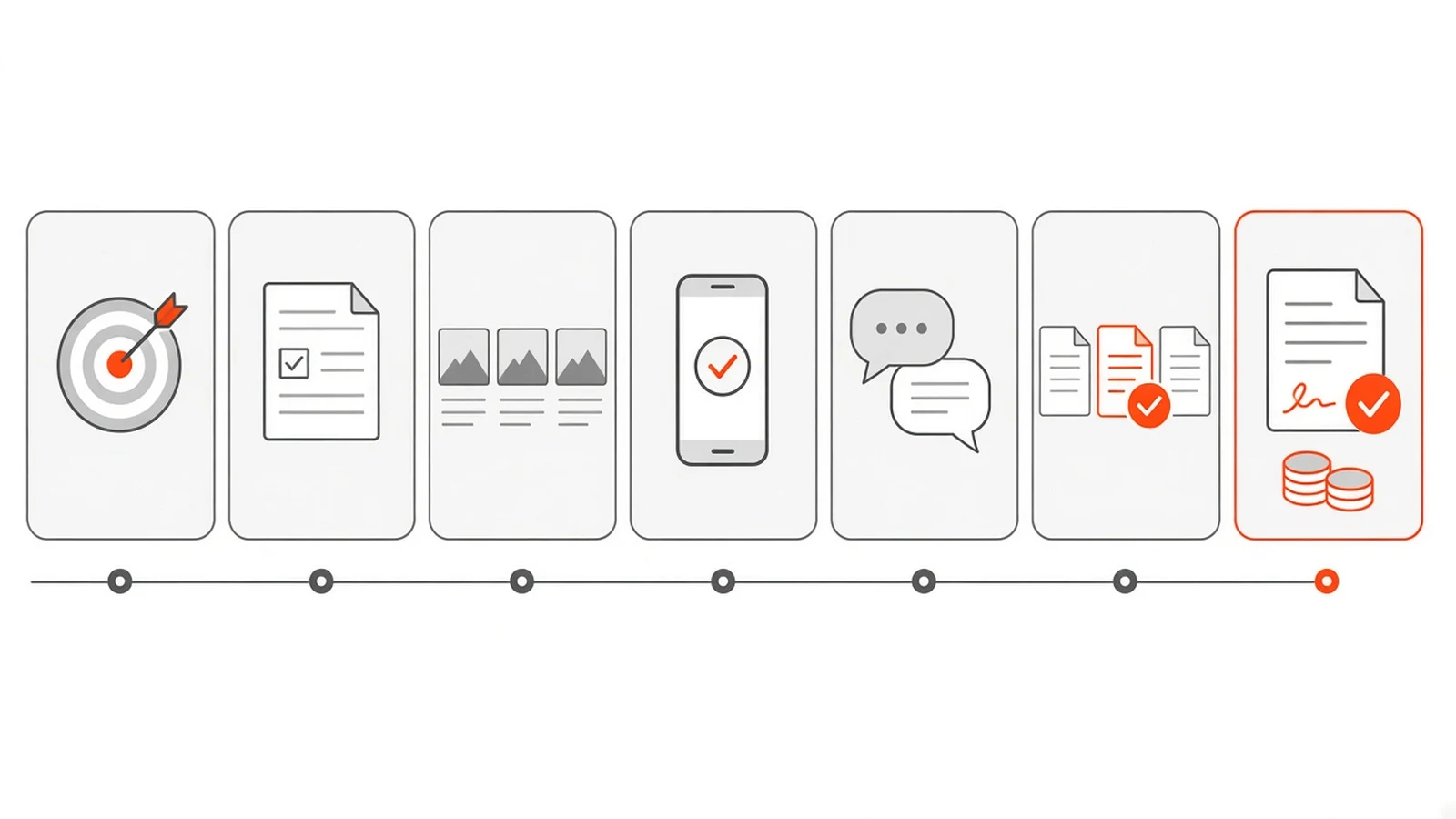
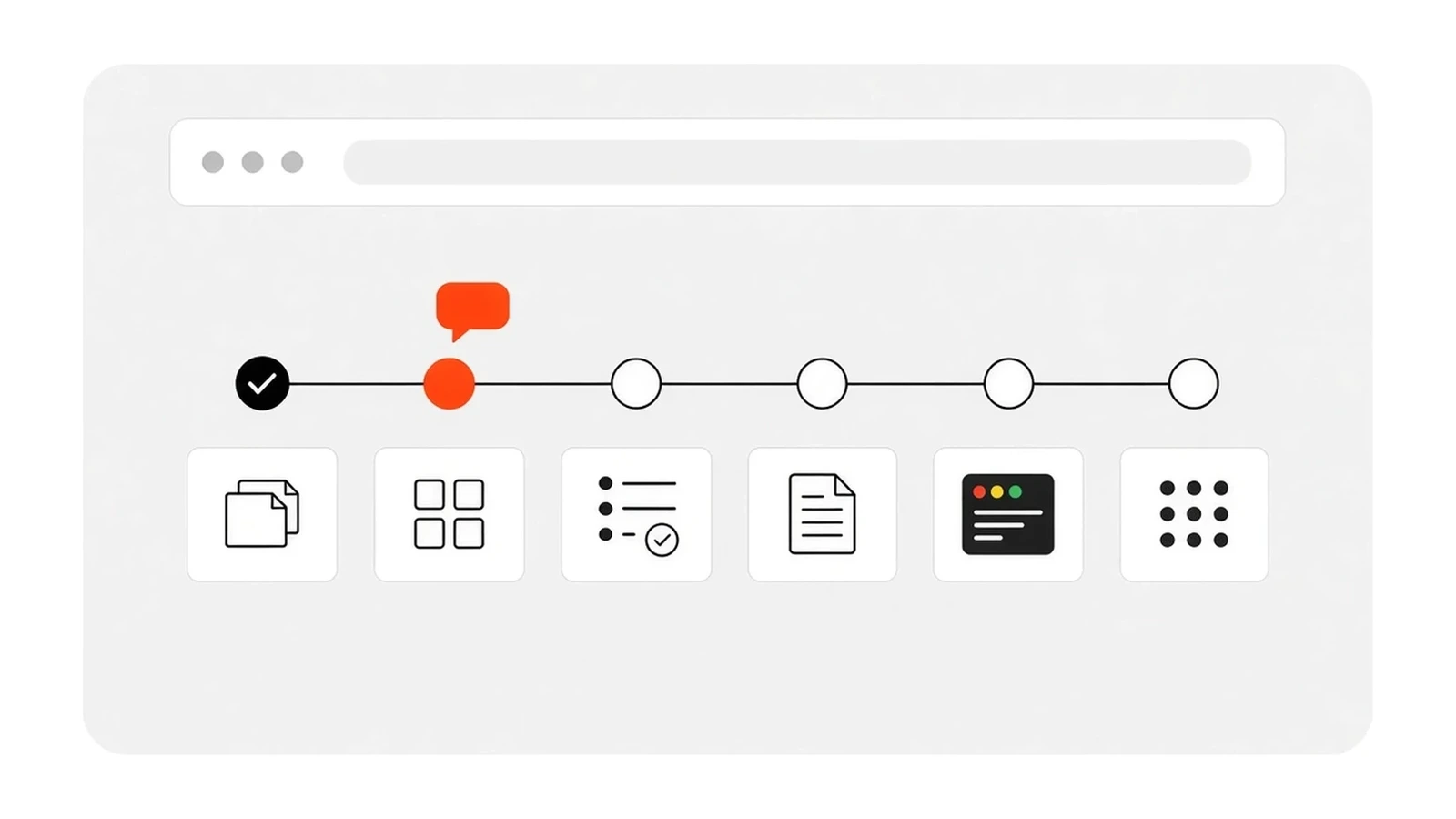
Work through seven steps in order: define the goal, write a brief, find candidates, check live work, run a short call with fixed questions, compare written quotes on the same scope, and agree milestones before the deposit. Skipping the early steps is what makes the later ones expensive. Each step takes hours, not weeks.
Here’s the order I’d follow if I were hiring someone for my own business:
- Decide what the site must do. Calls, WhatsApp chats, bookings, form enquiries or online orders. Pick one main action.
- Write a one-page brief. I cover what goes in it below.
- Find three to five candidates. Referrals, local businesses whose sites you like, and developers who publish their own work.
- Check their live work. Open real sites on your phone over mobile data.
- Run a 30-minute call. Same questions for everyone. Take notes.
- Compare written quotes. Same scope, same exclusions, side by side.
- Agree the paperwork, then pay. Scope, timeline, milestones, ownership and support, in writing.
None of this needs technical knowledge. It needs a bit of patience at the start, which is cheaper than patience at the end.
What should you prepare before you contact a web developer?#
Prepare a short brief: what your business does, who the site is for, the one action visitors should take, a rough page list, features like booking or payments, who writes the content, two or three sites you like, your budget range and your deadline. One page is enough. It turns vague quotes into comparable ones.
Here’s a brief template you can copy into a note:
- Business in two lines. What you sell, to whom, and where.
- Main goal. The one action that matters most: call, WhatsApp, enquiry form, booking or purchase.
- Pages. Even a rough list helps: home, services, about, contact, gallery.
- Features. Booking, payments, a blog, a second language, a client login, an enquiry form that goes to email or a sheet.
- Content. Who writes the text and who supplies the photos. Be honest here. Late content is one of the most common reasons websites run late.
- Examples. Two or three sites you like, and one thing you like about each.
- Budget range. A range, not a single number.
- Deadline. A real date and the reason for it, like a launch event or a season.
- Decision maker. Who approves designs and content on your side.
You don’t need to hide your budget. A range helps a good developer suggest the right size of solution instead of guessing. If you’ve no idea what’s realistic, read my guide to website cost in India in 2026 or try the website cost calculator to get a rough feel first.
Freelancer, agency or in-house: who should you be hiring?#
For most small business websites, the real choice is between a freelancer and a small agency. In-house hiring only makes sense when you need someone on payroll full time. I’ve written a separate, honest comparison of freelancer vs agency for a small business website, so I won’t repeat it here. The hiring process below works for both.
Where do you find a good web developer to hire?#
The safest places are referrals from business owners you trust, the credits on local business websites you like, and developers who publish their own work and case studies. Marketplaces suit tiny, well-defined fixes. For a full business website, a direct conversation with someone whose live work you can check is usually the better route.
A few practical tips:
- Ask other owners. “Who built your site, and would you hire them again?” is the most useful question in this whole guide.
- Look at site footers. Many developers credit themselves at the bottom of client sites.
- Search locally if it matters to you. Being in the same city helps if you want face-to-face meetings. If you’re in Jamnagar, my page on website design in Jamnagar covers what local businesses here usually need.
- Be wary of cold messages. Google’s own advice on hiring an SEO says to be careful with agencies and consultants who email you out of the blue. The same caution applies to website offers that land in your inbox or DMs.
How do you check a web developer’s portfolio is real?#
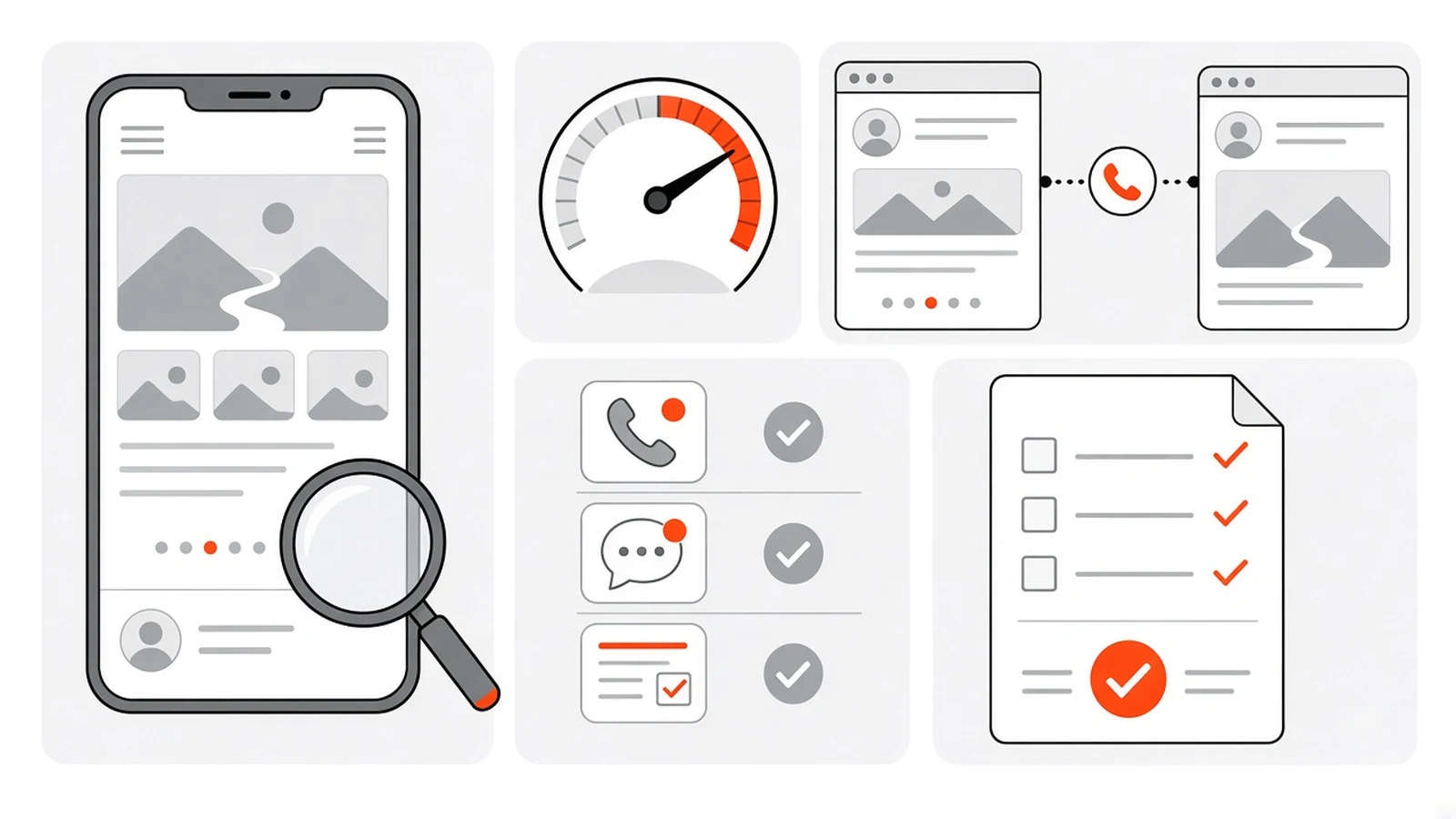
Ask for links to live sites, not screenshots. Open three of them on your own phone over mobile data, then ask the developer what they personally built on each one and whether you can speak to that client. Real work holds up to simple questions. Borrowed or template work usually doesn’t.
Here’s my quick portfolio check, the same one I’d want a client to run on me:
- Open the site on your phone. Does it load in a few seconds? Is the text readable without zooming? Do the buttons work?
- Try the contact path. Tap the phone number. Open the WhatsApp link. Fill in the form if it’s a test-friendly one. Do they actually work?
- Run one page through PageSpeed Insights. You’re not hiring on the score. You’re collecting something to ask about on the call.
- Ask “what did you do here?” Design, build, content, hosting, ongoing support? A project can involve several people. You want to know their part.
- Ask for one client you can contact. A short call or message with a past client tells you more than any review widget.
If you want to see what this looks like from my side, my work page lists the websites and web apps I’ve built.
What questions should you ask a web developer before hiring?#
Ask about five things: their process, what’s included and excluded, who owns what, how the site will be tested, and what happens after launch. Ask every candidate the same questions, write the answers down, and treat vague replies as a signal to dig deeper. The full checklist below groups the questions by topic.
You don’t need to understand every technical word in the answers. Listen for specifics: steps in order, named tools, clear yes or no answers. “Don’t worry, we’ll handle everything” isn’t an answer.
Questions about process and communication#
- What happens in the first week after I say yes?
- How will I see progress? Will I get a preview link I can open myself?
- How often will you send updates, and on which channel: email, WhatsApp or calls?
- What do you need from me, and by when, so the project doesn’t stall?
- How many projects are you working on at the same time?
Questions about scope and price#
- What exactly is included in this quote? Pages, features, content entry, testing, training?
- What’s not included? Copywriting, photos, translation, paid plugins, hosting, the domain?
- How many rounds of revisions are included?
- How do you handle a request that’s outside the agreed scope?
- Is this a fixed quote or an estimate?
Questions about ownership and access#
- Will the domain be registered in my name, in my own account?
- Whose account will the hosting be in?
- Will I get admin access to the website from launch day?
- Do I own the design and the custom code once I’ve paid in full?
- Which paid plugins, themes or services does the site depend on, and whose name are those licences in?
Questions about quality and testing#
- How do you test the site on phones and different browsers before launch?
- How do you check accessibility? Which standard do you follow?
- How do you make sure the contact form, WhatsApp links and phone links actually work?
- What do you set up for search: titles, descriptions, sitemap, redirects from my old site?
Questions about after launch#
- If something breaks in the first weeks after launch, will you fix it, and for how long?
- What does ongoing maintenance include, and is it optional?
- If we stop working together, what will you hand over?
- Will you show me how to edit text, images and posts myself?
Which questions should be answered before you pay a deposit?#
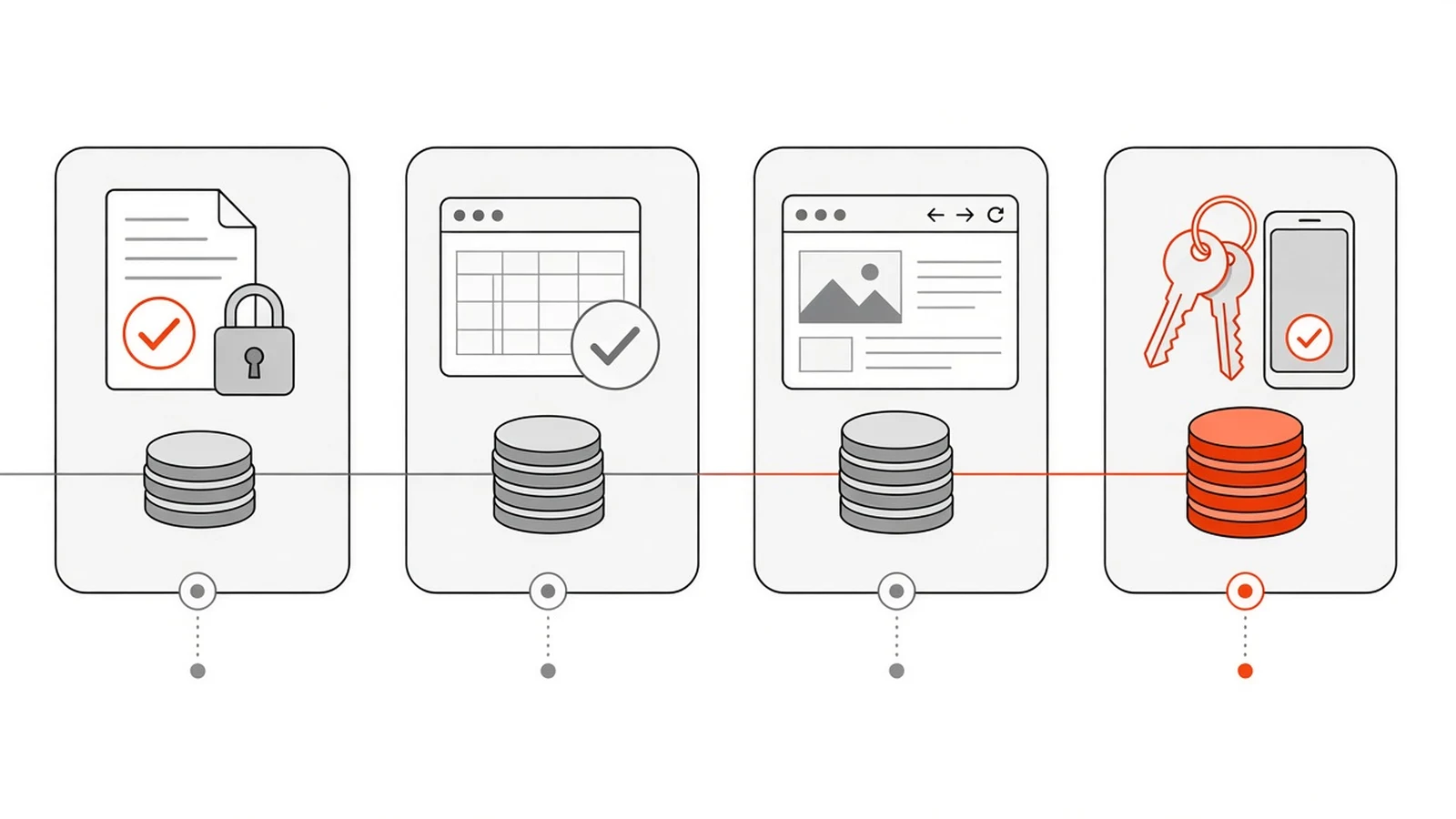
Before any deposit, you should have in writing: the scope with exclusions, the total price, the payment milestones, a realistic timeline, the number of revision rounds, and confirmation that the domain, hosting and admin access will be yours. If any of those are still “we’ll figure it out”, wait. A deposit should buy a defined piece of work.
This is the gap I see most often in hiring guides. They give you twenty questions but don’t say which ones matter before money moves. Here’s how I’d split them:
| Stage | What should be settled | Why it matters then |
|---|---|---|
| Before the deposit | Scope, exclusions, total price, milestones, timeline, revision rounds, ownership of domain and hosting | After you pay, your bargaining power drops. Unclear scope becomes “extra work”. |
| Before design sign-off | Page list, main action per page, content owner, sample of real text | Changing structure after build starts costs time on both sides. |
| Before the final payment | Live site tested on phones, forms and links working, every login handed over, editing walkthrough done | This is your last natural checkpoint. Don’t release it early. |
| After launch | Bug-fix window, maintenance terms, who to contact and how fast they reply | Problems show up with real visitors, not in previews. |
Paying in instalments as milestones are reached is also what official small business guidance recommends, for example the Western Australian government’s guide to choosing a website professional. It’s fair to both sides. The developer isn’t working for free, and you’re not paying for work you haven’t seen.
Who should own the domain, hosting and logins?#
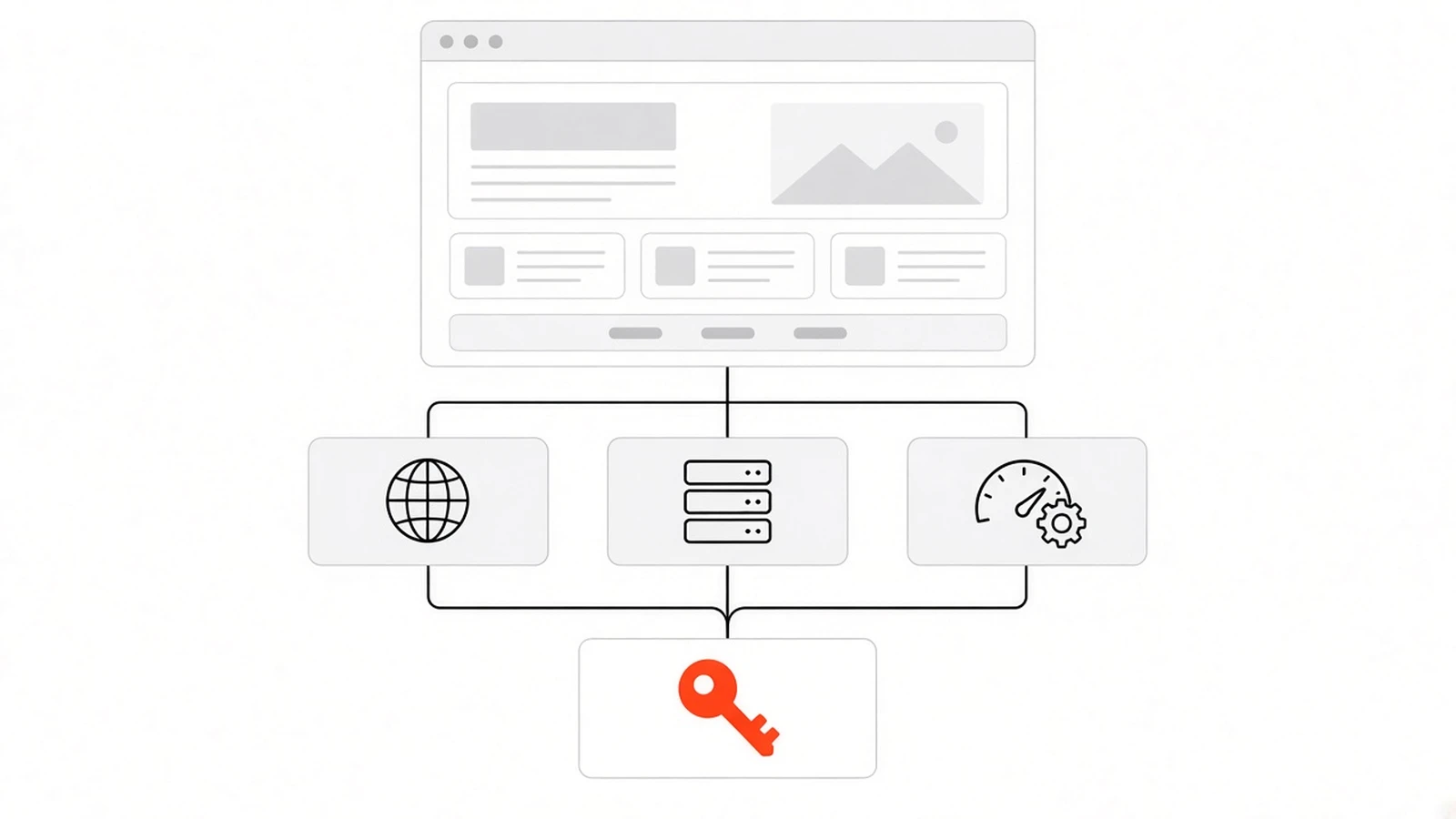
You should. The domain should be registered in your name, in an account you control, and the hosting, business email, Google Analytics and Search Console should be yours too. Your developer can have access to do the work. Access is fine. Ownership should stay with the business that’s paying for it.
ICANN, the body that coordinates domain names worldwide, lists the rights and responsibilities of a domain registrant. One of them is that the registrant assumes sole responsibility for the registration and use of the domain name. That registrant should be you or your business, not the person you hired.
You can check whose details sit on a domain with ICANN’s free registration data lookup. Many domains show privacy-protected details, so the clearer test is simple: can you log in to the registrar account yourself?

On Search Console, Google’s advice on hiring an SEO is useful here too. If someone offers an audit, Google suggests granting only read access at that stage, not write access. The same principle works for any outside help: give the access the job needs, and keep the keys.
I’ve covered the full ownership checklist, including what to do if your domain is already in someone else’s name, in who owns your website. For what I do on my own projects: I always recommend that hosting and domain accounts are registered in the client’s name, and once a project is fully paid, the site and the custom code I write for it belong to the client.
How do you compare quotes from different web developers?#
Put every quote against the same brief and compare line by line: what’s included, what’s excluded, timeline, revision rounds, payment milestones, ownership and post-launch support. The cheapest quote often leaves out content entry, testing or support. The most expensive one isn’t automatically better. Ask each developer to explain the gaps.
Here’s a simple table you can fill in during your comparison:
| Check | Quote A | Quote B | Quote C |
|---|---|---|---|
| Pages and features listed clearly | |||
| Exclusions written down | |||
| Fixed price or estimate | |||
| Timeline broken into stages | |||
| Revision rounds stated | |||
| Payment tied to milestones | |||
| Domain and hosting in your name | |||
| Bug-fix period after launch | |||
| Maintenance terms explained |
If two quotes look very different, the usual reason is that the developers understood two different projects. Go back to your brief and ask both: “What did you assume I need that I didn’t ask for?”
How much does it cost to hire a web developer?#
It depends on scope, content and features, so a fair answer needs a brief. For context on my own pricing: a single-page website with me starts at ₹15,000, and everything bigger gets a fixed quote after a short call. For how prices are built up in India, see my website cost guide.
What are the red flags when hiring a web developer?#
The biggest red flags are a demand for full payment upfront, no written scope, a domain registered in the developer’s name, guaranteed Google rankings, no live work you can open, and vague answers about what happens after launch. Any one of these is worth a pause. Two or more, and I’d keep looking.
A good answer and a vague answer often sound similar on a call. Here’s how to tell them apart:
| You ask | A good answer sounds like | A vague answer sounds like |
|---|---|---|
| Who owns the domain? | “It goes in your name, in your account. I’ll need access while I work.” | “Don’t worry, I’ll manage it for you.” |
| What’s included? | A written list of pages, features, testing and exclusions. | “Everything you need.” |
| Can you guarantee first page on Google? | “No. Nobody can. Here’s what I’ll set up so Google can understand your site.” | “Yes, page one in a month.” |
| How will I see progress? | “You’ll get a preview link and regular updates.” | “You’ll see it when it’s done.” |
| What if something breaks after launch? | A stated bug-fix window and how to reach them. | “Just call me.” |
| How do you test accessibility? | Names a standard like WCAG and explains keyboard and screen reader checks. | “It’s responsive, so it’s fine.” |
That third row isn’t my opinion. Google’s own guidance on hiring an SEO says plainly that no one can guarantee a #1 ranking on Google, and to be wary of anyone who claims a special relationship with Google.
On accessibility, the reference standard is the Web Content Accessibility Guidelines (WCAG) from the W3C. You don’t need to read it. You just need a developer who knows it exists and tests against it.
How do you hire a web developer in India if you’re abroad?#
The process is the same, with three additions: agree a regular overlap time for calls, insist on written updates and preview links so progress isn’t tied to meetings, and put currency, invoice format and payment method in the written agreement. Time zones are easy to manage. Unwritten assumptions across borders aren’t.
I work with clients in India and abroad from Jamnagar, so this is a practical point for me, not a theory. What makes remote projects run smoothly:
- A fixed overlap window. An hour or two a few times a week, agreed at the start.
- Written updates. A short summary of what’s done, what’s next and what’s blocked, so you can catch up in your own morning.
- Preview links. You should be able to open work in progress in your own browser whenever you like.
- Money terms in writing. Currency, invoice details, payment method and the milestone schedule, all agreed before the first payment.
- One decision maker. Feedback from five people across two continents is how timelines double.
If you’re curious how long the build itself takes once you’ve hired someone, I’ve covered that in how long it takes to build a business website.
What should happen after you hire a web developer?#
After you sign, expect a kickoff call, a plan or sitemap to approve, design for review, a build you can preview, testing, launch and a handover with every login and a short editing walkthrough. Your part is quick feedback, content on time and one person making decisions. Good projects feel predictable, not dramatic.
Before you release the final payment, run through a basic launch check: forms, phone and WhatsApp links, mobile layout, page titles, redirects from any old pages, and that every account is in your name. My website launch checklist has the full list.
The questions to ask a web developer: a printable checklist#
Copy this list into your notes before each call. Tick each item when you have a clear answer, ideally in writing.
Before the call
- I’ve written a one-page brief with goal, pages, features, content owner, budget range and deadline.
- I’ve opened three of their live sites on my phone.
- I’ve checked the contact path on at least one of those sites.
On the call
- What did you personally build on these projects?
- Can I speak to one past client?
- What happens in the first week after I say yes?
- How will I see progress, and how often will you update me?
- What’s included, and what’s excluded?
- How many revision rounds are included?
- How are out-of-scope requests priced and approved?
- Will the domain, hosting and admin access be in my name?
- Which paid plugins or services will the site depend on?
- How do you test on phones, browsers and for accessibility?
- What do you set up for search, and will you handle redirects from my old site?
- What’s the bug-fix period after launch?
- What does maintenance include, and is it optional?
Before the deposit
- Written scope with exclusions
- Total price and payment milestones
- Timeline in stages
- Ownership of domain, hosting and code confirmed
Before the final payment
- Site live and tested on my phone
- Forms and contact links working
- Every login handed over
- Editing walkthrough done
So, how should you hire a web developer?#
Slowly at the start and quickly after that. Spend an evening on the brief, an hour checking live work, and half an hour per call asking the same questions. Then get it all in writing, keep your accounts in your own name, and tie payments to work you can see. That’s most of the risk gone.
If you’d like to run this checklist on me, I’m happy to answer every question on it. I build WordPress websites and single-page landing pages for small businesses, handle website redesigns for sites that have outgrown their first version, and offer maintenance after launch.
Send me your brief, or just a couple of lines about what you’re trying to do, through my contact page. I’ll reply with honest questions, a clear plan and a fixed quote before any work starts.
Frequently asked questions
How do I hire a web developer for my small business?
Write a one-page brief with your goal, pages, features, content owner, budget range and deadline. Shortlist two or three developers whose live sites you have checked on your phone, ask each the same questions on a short call, compare written quotes on the same scope, and agree milestones in writing before you pay a deposit.
What questions should I ask a web developer before hiring?
Ask what is included and excluded in the quote, how many revision rounds you get, how out-of-scope work is priced, whose name the domain and hosting will be in, how the site is tested on phones and for accessibility, what the bug-fix period after launch is, and what maintenance includes.
How much should I pay a web developer upfront?
There is no single right figure, but avoid paying the full amount upfront. Pay a deposit only once the scope, exclusions, total price, timeline and milestones are written down, then release later payments as you see work, such as design sign-off, a preview build and the final handover.
Should the domain be in my name or the developer's name?
The domain should be registered in your name or your business's name, in a registrar account you can log in to. Your developer can be given access to do the work. ICANN says the registrant takes sole responsibility for the registration and use of the domain, so that should be you.
Can a web developer guarantee first page rankings on Google?
No. Google's own guidance on hiring an SEO says no one can guarantee a number one ranking. A good developer will explain what they set up so Google can understand your site, such as titles, descriptions, a sitemap and redirects, without promising positions.
How do I check if a web developer's portfolio is genuine?
Ask for links to live sites rather than screenshots, open them on your own phone, test the contact links and forms, and ask the developer exactly what they built on each project. Then ask to speak to one past client. Real work holds up to these simple checks.
Is it safe to hire a web developer in India if my business is abroad?
It can work well with a clear process. Agree a regular overlap time for calls, ask for written updates and preview links you can open any time, and put the currency, invoice details, payment method and milestones in writing before the first payment.
How much does it cost to hire a web developer in India?
It depends on the pages, features and content involved, so a fair price needs a brief. With me, a single-page website starts at Rs 15,000, and larger sites get a fixed quote after a short call. Compare quotes on the same written scope, not on the headline number.
Comments
No comments yet. Add the first one below.